
The Father: poignancy and tenacity with a vein of dark humour
Florian Zeller’s The Father premiered in Paris in 2012: according to The Times, it’s ‘one of the best plays of the century’. It has won several awards internationally, and a film adaptation, directed and co-written by Zeller, was released in 2020, gaining Academy Awards for Best Adapted Screenplay and Best Actor (Anthony Hopkins).
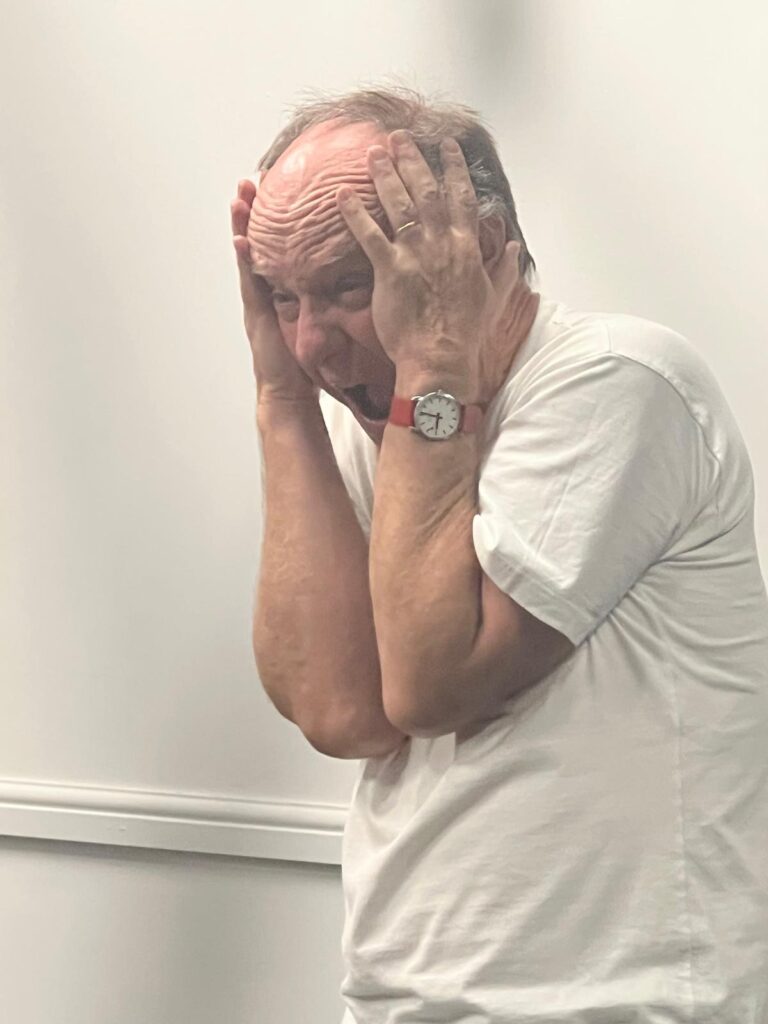
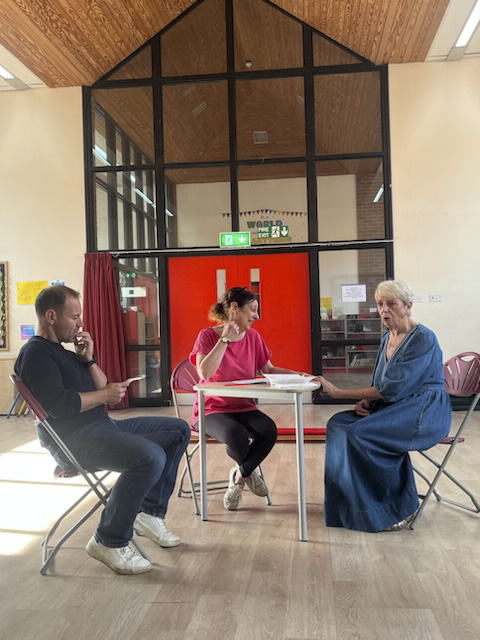
The play takes us into the mind of André, an elderly man beginning to show the early symptoms of dementia. As the action unfolds, we see André living with different stages of the condition, and at the same time working through his relationship with his daughter Anne. Acute and complicated questions of care, autonomy, and love arise, as we witness two completely rounded human beings attempt to cope with the strenuous demands of their situation.
As director Laura Ilinca notes, André is onstage for almost the whole play, and his perspective dominates. Yet in spite of the ravages of dementia, he’s much more than a victim of illness: he’s shown as a tenacious individual, determined not only to hold onto his autonomy, but also to assert control over his environment. He can be brave, fearful, charming, cruel, practical, manipulative, and much more. For anyone who’s cared for an elderly relative, he will most likely be instantly recognisable.
Christopher Wallace, who plays André, acknowledges that this is a singularly meaty part, but draws attention to the large amount of humour interwoven into the role. He maintains that one of the main challenges in rehearsal has been to stop laughing. Audiences will be surprised and enlightened by the vein of dark comedy running through the script.
André’s daughter Anne, played by Sarah Gennoe, is a similarly complex study. Torn by concern for her father and her own needs in life, she’s faced with some extraordinarily difficult dilemmas. As we follow her part in the action, often thanklessly taken to task by her father, any romanticised conception of care is stripped away. It’s a deeply moving and honest element of the play.
As it focuses on André’s experience of dementia, Laura notes that the play raises some special technical challenges, especially how to render his loosened grasp of where he’s located at any point in time. Is he in his own apartment? In Anne’s home? In a residential care facility? Laura pays tribute to the skill of the set designers in creating a space onstage that can capture the fluid way in which André’s sense of place comes to operate.
Dementia is a fact of life that many individuals and families fear and struggle with. In bringing The Father to the Barn, Laura and her team aim to throw a different light on a situation that can seem relatable in the rawest way. If the play looks frankly at vulnerability, cruelty and abjection, it’s also shot through with compassion, resilience, humour and love. In spite of all the challenges faced by André and Anne, Laura hopes the audience will come away from the play with a sense of forgiveness for human frailty under pressure and ‘not be afraid’.
And some further views
This is a wonderful award-winning play, both humorous and moving – but don’t just take our word for it, check out the reviews:
“A bottle of wine, a watch and a chicken might seem unlikely companions but in this production they become powerful symbols of time, memory and domestic life. These objects create a visual language that is both tender and unsettling.”
“In this darkly humorous and deeply poignant translation of Florian Zeller’s The Father, there is a sobering, realistic family story, an unsentimental, emotionally intense look at the world through the eyes of a man experiencing dementia, a dramatic illustration of the physical losses which occur along with the mental ones. The play was considered as ‘the most acclaimed new play in the last decade’ when it won the Molière Award for best play in 2014.”
“What a show! A beautiful script. I can’t recommend it highly enough.”
“OMG if you’re free tomorrow night you must go see. We were all captivated from the start.”
Alun David
Comments from the Chair –
Welcome to October’s Barn News

While it’s still fresh in my mind, I want to thank everyone who helped organise and run our Open Day on 20th September. Although it was a Sunday, we had a good turnout and about 150 people came to look round the theatre and some sat in on a rehearsal. Most of all, they wanted to know more about us and chat with members. I shouldn’t be, but I’m always surprised how many locals don’t know we exist, so we were able to talk about the new season, the various roles for volunteers, and get to know them a little bit. I especially enjoyed my conversation with a couple who had brought their young daughter with them, and who have recently moved into Handside Lane. They said how much they liked the friendly atmosphere at the Barn and they enjoyed meeting members. I’m sure we’ll see them at a show at some time in the future, or possibly helping, childcare permitting!
Atmosphere is an intangible, but very important, aspect of any club like ours. If someone waved a magic wand and allowed us to improve and update the theatre as much as we wanted, no expenses spared, I wouldn’t want to lose the ‘feel’ of the Barn. For example, the bar and club room can get very busy when there’s a full house, but it’s more like a small pub than some rather soulless bars in more modern theatres, and members and audiences enjoy that. Of course, if someone has a magic wand, I’m happy to have that conversation.
As I write this, we’re in the second week of The Full Monty, which seems to be going down a storm, with full houses every night. Suzie and I are watching it on the last night and I’m genuinely excited to see how the film translates to a stage performance. Suzie has been helping out with some of the costumes and quick changes, and one of the cast has written a cue sheet for himself, which includes the immortal line ‘check I’m wearing stunt thong under Y-fronts’. Now there’s something you don’t hear very often!
We’ll take the set of The Full Monty down on the Sunday after the last night, and start building the set for The Father on the Monday morning so the cast and crew can get used to the stage as quickly as possible.
During the set build and final rehearsals for The Father, rehearsals are also going on for Blue Heart, Underdog, The Box of Delights and The Hills of California. Together with all the other activities that occur at the Barn, the building is running at full capacity, which is wonderful but also a bit scary as the pressure on individual volunteers can be pretty intense if we’re not aware and careful to mitigate it. This is why we’re always keen to find new people to learn new skills backstage or front of house, and you’ll be very welcome to join the little family that comes together to work on a show. So, while you’re busy buying lots of tickets for The Father (a great play) and all other productions that take your fancy, why not ask if you can shadow someone in a role during a production to find out what goes on?
I’m delighted that Danny Swanson will be taking the reins as Chairman at the AGM in January, and we recently sat down to talk about what it is I do. Apart from a couple of procedural activities, e.g. chairing meetings and the AGM, in some ways it’s embarrassingly vague. It’s back to the indefinable aspects of feel and tone of the Barn and occasionally being a sounding board for members as well as being the ‘face of the Barn’, whatever that means. I keep reminding myself that we’re all volunteers who choose to spend some of our free time following our passion for theatre, or who simply come along to the Barn to enjoy the company of like-minded, or possibly not so like-minded, people. The main pleasure of being Chairman is to see how all the different personalities and age groups mix and pull together to create a thriving community. Long may it last.
And of course I write down a stream of consciousness every month, so I’m sure you’ll be relieved when Danny takes over that aspect.
Final plug for tickets. Our talented cast, crew and directors work very hard to put on the best shows possible for our audiences, so please support them when you can. I know that I and they will appreciate it. I’ll see you in the theatre or bar.
Ian Major
Chair
Membership & Council
Minutes from previosu Council meetings.
Please find the minutes of all meetings of the Barn Theatre Council. Once they are approved, usually the month after, they will be uploaded here.
Our membership news depends on information we get from YOU
New members
Tamar Cameron – acting, box office, finance/admin, production management, props
Matt Gray – acting, directing
Carol Elva Greenwell – audience
Gill Martin – audience
Jenna Moore – acting
Finn O’Grady – acting lighting, set design, set building
Claire Smith – audience
Patrick Sunners – acting
Studio Director
The Barn is looking to appoint a new Studio Director from January. You will be responsible for programming each season in the Barn Studio, including the three shows per season plus any outside shows that you may wish to include. You will liaise closely with the Artistic Director and Barn Council, keeping everyone informed about any developments or issues. You’ll also be offering help and support to the directors and production managers of the selected shows throughout the season.
If you’re interested in applying for this role then please contact Danny Swanson at [email protected] for more information.
Danny Swanson
The Hills of California
Cast and crew

Gloria – Julia Riley
Ruby – Lynsey Wallace
Jillian / Mrs Smith – Alice Croot
Penny / Biddy – Jess Russell
Potts / Fogg / Doctor – Des Turner
Bill / Halliwell – Paul Russell
Dennis / Larkin – Mike Curry
Luther St John / Mr Smith – John Cook
Young Joan / Patty – Hannah Muxlow
Young Gloria – Chloe Evans
Young Ruby – Daisy Solomon
Young Jillian – Pippa Kidd
Tony – Jonah Cook
Assistant Director – Michelle Airey
Production Manager – Jacqueline Clayton
Stage Manager – Madeleine Evans
ASM – Reuben Cook
Specialist Sound – Rob Wallace
Music / Singing – George Curry
Sound – Rob Wallace, John Gardner
Lighting Design – Trevor Wallace
Lighting Operator – Andy Barker
Costumes – Yvonne Bartlett, Suzie Major
Props – Linda Miles, Georgie Palmer
Rehearsal Prompt – Annie Woolmington
Chaperones – Jacqueline Clayton, Yvonne Bartlett, Georgie Palmer, Linda Miles
Audition Notice:
Till the Stars Come Down
by Beth Steel
Directed by Mark O’Sullivan
Playing dates: 26th March to 3rd April 2027
Audition dates:
Tuesday 17th November (8pm) in the Studio
Thursday 19th November (8pm) in the Studio
Sunday 22nd November (from 10.30am) in Room 1
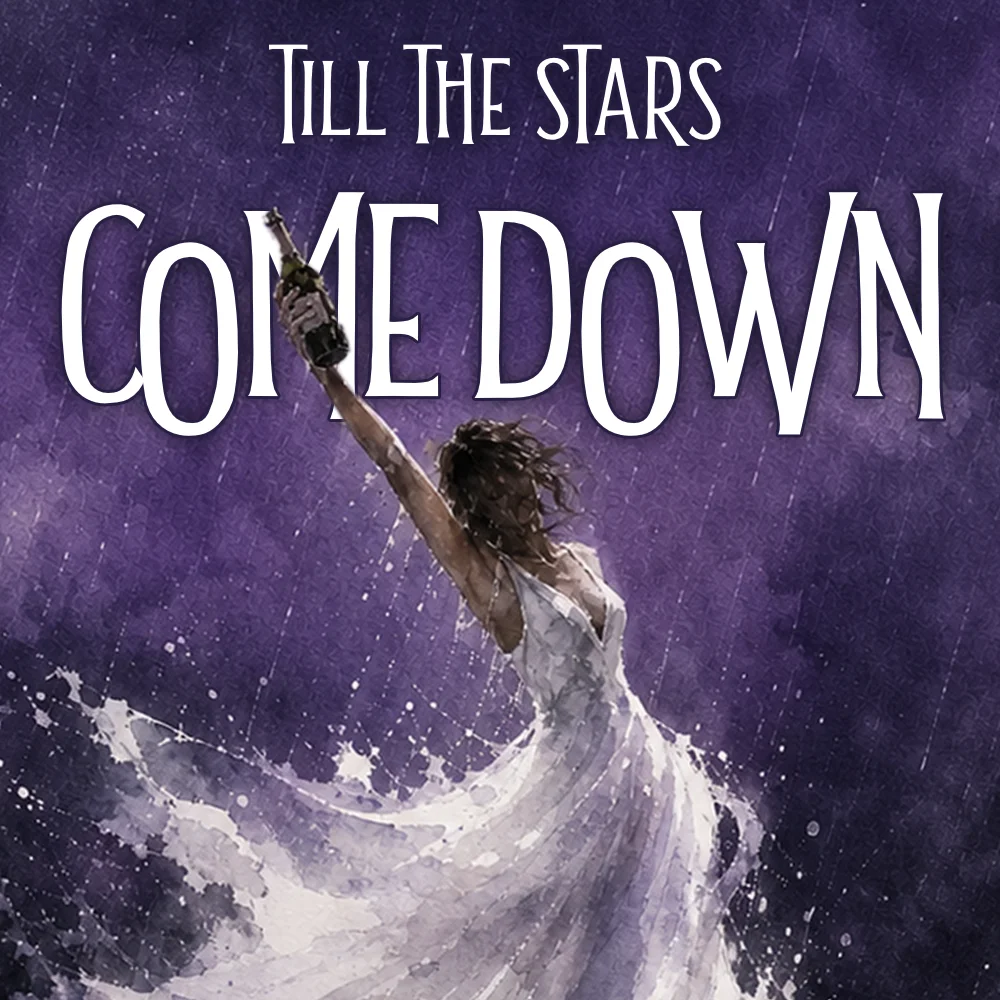
Till the Stars Come Down is set in the present day in what was once the heart of coal-mining country in Nottinghamshire. It’s Sylvia and Marek’s wedding day, and you’re all invited. Sylvia and her family have gathered to celebrate in traditional English fashion. What isn’t traditional is that, unlike her older sisters, Sylvia’s husband-to-be isn’t local: Marek is a Polish immigrant. As the festivities unfold, fuelled by beer and vodka, emotions run high, and fault-lines appear in this family that will change their lives forever.
The play takes place over an almost 24-hour period, and so events unfold in what feels like real time. The tensions and jeopardy build steadily throughout. It’s a play about secrets, shame, longing, love and devastation. From the heated straighteners of the morning of the wedding, to the heated arguments and recriminations the night ends with.
I think anyone who grew up in a working-class family or area – like I did – will recognise these people, these lives. When I first read it, I was immediately transported back to the weddings I was dragged to in my childhood. You could guarantee that at some point there would be an argument, someone called Debbie would be sick because she ‘doesn’t usually drink’, an old Irish man in suit trousers and a jacket that didn’t match would sing Danny Boy, and Diana Ross’s Chain Reaction would lure every middle-aged woman, siren-like, to the dancefloor. There was always drama. Always. And it was always memorable.
The term is bandied around a bit too much, but this really is a state-of-the-nation play. The circumstances and concerns of this one family echo the scars and divisions of the country we live in – especially the devastating economic and social changes in so much of the Midlands and North of this country. The ease with which we sometimes blame the thing in front of us – whether it’s immigrants, capitalism, zero-hours contracts, Brexit, deindustrialisation – because it’s easier than looking behind it to see how we got to this point.
But it’s also a family drama, in the universal sense: showing how we’re bound together by blood and history, wrestling with our individual and collective desires and disappointments. It’s not one-sided. It isn’t a ‘you’re wrong, I’m right’ piece of writing. These characters are real. The people are real. Their humour is real. Their world and their grievances are real and justified. As I said before, you’ll recognise these people. You’ll recognise their hopes, their faults, their prejudices.
Let’s talk characters. There are some to-die-for parts, especially for women. I’m not going to go through every one, because I think you should read the play and see if someone connects with you.
The three sisters – Maggie, Hazel and Sylvia
At the heart of the play are three sisters who’ve grown up together, but have ended up in very different places. They’re not three variations on the same character. Each sister has her own history, her own wounds, her own ambitions and her own way of surviving the family she comes from. The relationships between them are everything: the intimacy, the shorthand, the old resentments, the teasing, the loyalty and the things they know about one another that nobody else does. They require actors who can make us believe in a lifetime of shared history – often within a single look or a throwaway joke. All three parts demand depth, comic timing and enormous emotional range. Each woman gets moments of extraordinary vulnerability, but none of them is simply a victim or a hero. They can be funny, cruel, loving, selfish, generous, infuriating and heartbreaking – sometimes within the same scene. There’s also a fascinating question at the centre of the three relationships: what happens when the roles we’ve played within a family for years suddenly stop working? These are substantial, demanding parts for actors who are comfortable allowing a character to be messy, contradictory and deeply human.
Marek
Marek is Sylvia’s fiancé and the outsider who’s become part of this family. He arrived in Britain with very little and has built a successful life for himself. He’s ambitious, capable and clearly loves Sylvia – but being accepted into her family isn’t quite as simple as being welcomed through the door. Marek needs an actor who can convey both strength and vulnerability. He’s an outsider, but he isn’t defined by being one. He has his own pride, humour, frustrations and ambitions, and his presence inevitably exposes some of the assumptions and prejudices that exist around him. There’s warmth and comedy in the character, but also steel. Marek isn’t someone who’ll quietly accept being diminished. The relationship between Marek and Sylvia is particularly important: this needs to feel like a real love story, not simply a device to put an outsider into the family.
John
John is the husband of one of the sisters and, in many ways, another man who’s become part of the family rather than being born into it. He knows these people intimately. He knows the history, the arguments and the dynamics – but he also occupies a slightly different position within them. John needs an actor who can find the humanity underneath the bravado. There’s humour here, but also frustration and a sense of a man wrestling with where his life has ended up. His relationship with his wife is particularly revealing: what remains between two people when love, disappointment, money, pride and years of shared history have all become tangled together?
Dad
The sisters’ father is one of the people around whom the family’s history has been built. He belongs to an older generation and carries with him the values, expectations and assumptions of the world in which he grew up. But this isn’t a caricature of a traditional working-class dad. He’s a man who loves his family, has his own disappointments and has lived through enormous changes in the world around him. There’s room for humour, affection and tenderness, but also for the uncomfortable things that can happen when an older generation and a younger generation no longer see the world in quite the same way. The actor needs to make us understand why this man became the person he is, rather than simply judging him for it.
Aunty Carol
And then there’s Aunty Carol. A gift of a part. Carol is the sort of woman who can walk into a room and immediately change its temperature. She has opinions. Lots of them. She’s funny, formidable and completely unafraid to say what she thinks. But the danger with Carol is playing only the comedy. Underneath the force of personality is a woman with her own history, her own disappointments and her own complicated relationship with the family. The comedy makes her hugely entertaining, but the actor playing her also needs to be able to reveal the human being underneath it. Carol should be funny enough that we want her in every scene – and complicated enough that we aren’t always sure whether we should. It is, frankly, a brilliant part.
Uncle Pete
Carol’s husband, Pete, has spent a long time alongside a very big personality. He’s part of the older generation of this family and has his own place within its history, but his relationship with Carol gives the character an interesting dynamic: sometimes he’s her partner, sometimes her foil,
sometimes the person who’s learned when to keep quiet. There’s plenty of comedy in Pete, but the actor should resist making him simply the bumbling husband. There’s a real person here, with his own perspective on the family and the world they’ve inherited.
Leanne
Leanne is the older of the two younger characters and sits in an interesting position within the family. She’s old enough to be beginning to understand the adults around her, but young enough not to have inherited all of their certainties. She’s watching. Listening. Working things out. That makes her more than simply a young person caught up in the adults’ drama. What she sees – and what she doesn’t yet understand – gives us another perspective on this family. The role needs an actor who can bring intelligence, naturalism and a sense of a young person trying to work out where they fit, rather than simply playing ‘the teenager’.
Sarah
Sarah is the youngest member of the family. She’s still a child, and that matters. She experiences the wedding and the adults around her differently from everyone else. There can be enormous comedy in that, but also something much more affecting. Children notice things adults assume they haven’t noticed. They absorb atmospheres even when they don’t understand their causes. The actor playing Sarah will need to be completely natural and believable – not an exaggerated ‘stage
child’ – and able to bring the audience into the world of the play from a child’s perspective.
Casting
For me, casting will be about getting the gaps, relationships and dynamics right. These characters have known each other for years. Some are related by blood; others have married into the family. There are alliances, rivalries, loyalties and old wounds. The chemistry between the actors is therefore just as important as the individual performances. I’m not going to turn anyone away who feels a real connection to a part because they don’t fit some arbitrary idea of what the character ‘should’ look like. If you read the play and recognise something in one of these people, I want to see you.
A word on accents: we’ll be going for proper, authentic Nottinghamshire – not just a vague ‘north of Woolmer Green’.
I love comedy, and it’s very, very funny, this play. But I also love things – as you may know – that take a baseball bat to your face. That say the things and have the arguments we, most of us, avoid at all costs. It doesn’t preach, and it offers no easy answers, but it also doesn’t let the division hide in the shadows. This play is important. Especially important now, in the climate we live in. With division everywhere. Not just far away, over there. Even here, in the leafy west side of WGC. In the things said, promoted and endorsed by prominent members of this theatre – ok, past members. Mostly.
There are many great lines in this play, but I’m going to leave you with this one: Marek, the Polish immigrant groom who arrived in the UK on a Megabus with £60 to his name, and now runs his own successful building firm, offers his new sister-in-law’s unemployed husband a job.
She mutters: “They give us jobs now, do they?” And Marek replies: “You need to decide whether you are a victim or superior – because you can’t be both.”
Auditions and scripts
If you’d like to audition, scripts will be available from:
Production Manager, Sarah Gennoe ([email protected])
Please read the play before auditioning and, if possible, come with a sense of which character or characters you feel you connect with.
Further information about the audition process will be provided with the scripts. Come and have a read. Find the person in this family that speaks to you. And let’s see what happens.
Mark O’Sullivan
Director
Surrealism in the Studio
Steve Thompson’s production of Caryl Churchill’s Blue Heart runs from Tuesday 27th to Saturday 31st October. He explains why it’s one you won’t want to miss.
Caryl Churchill has been proclaimed as Britain’s greatest living playwright (in 2011, the Village Voice magazine in New York actually voted her the greatest living playwright in the world!). She’s a writer of enormous significance: more than anyone, she has documented social change in late-twentieth-century Britain. Her plays have immense impact, but they’re also great fun and boundlessly entertaining.

Her play Cloud 9 (1979, soon to be revived at the National) documented the sexual revolution, using gender-swapping in the casting. Top Girls (1982, Evening Standard Best New Play) was the definitive statement about 80s feminism, where a female business executive comes face-to-face with authoritative women from history. Serious Money (1987, Olivier Award for Best New Play) told the story of the power of money in Thatcher’s Britain using music and rhyme. The Times critic wrote: ‘Churchill’s plays seize and startle, asking key questions in dramatically daring ways’. Her plays frequently appear on the GCSE and A-level syllabus.
And yet it’s been over 30 years since we produced one at the Barn (it was October 1993 – the play was Top Girls and I directed it. I was 26). I’m thrilled that we’ve returned to Churchill this season with what is undoubtedly her funniest and most jubilantly entertaining play: Blue Heart. It’s wildly surreal and unexpected – like disappearing down a rabbit-hole into an exquisite fantasy.
I saw the original production at the Edinburgh Festival in 1997 (it was a preview and Churchill was in the row in front of me, taking notes). I remember leaving the theatre and phoning everyone I knew – friends and family – to tell them ‘You’ve got to see this’. Theatre rarely has the power to surprise me. Blue Heart made me gasp. Come along and you’ll see what I mean.
Eight wonderful actors are bringing the play to life: Danny Swanson, Julia Riley, Jan Palmer Sayer, Natalie Gordon, Suzie Major, Peter Bryans, Francine Ross and Esther Bishop.
The Barn is my favourite theatre because, for so many years, it has allowed me to fulfil my ambitions. Directing Blue Heart is one of them.
‘One of the funniest short plays ever written’ – Michael Billington.
‘A fiendishly clever and surreal play, timed to perfection’ – Guardian.
Steve Thompson
Director
Membership news: reduced membership for all under-25s
Celia Roberts
Membership Director
Another great Open Day
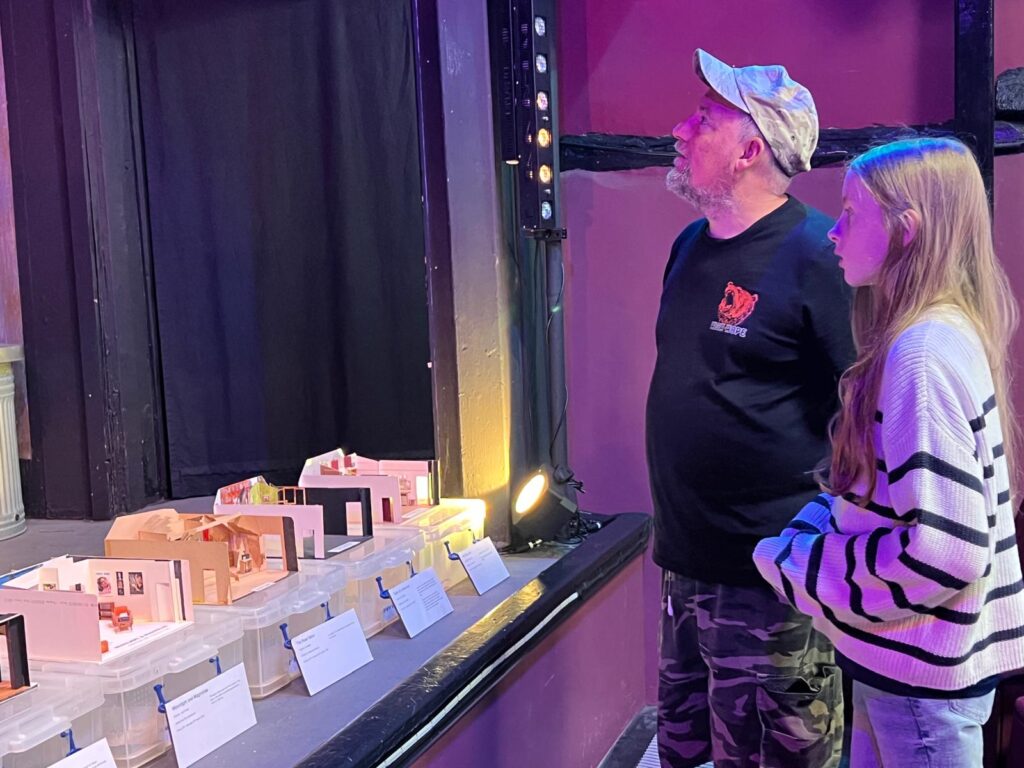
“There’s so much incredible talent here…”
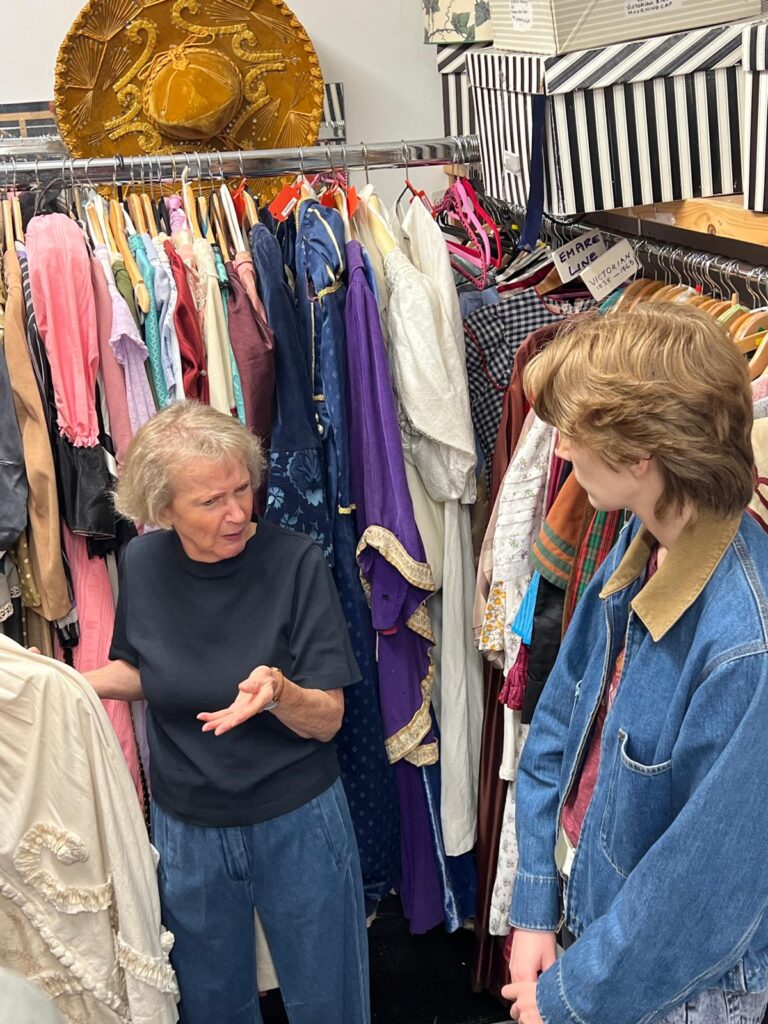
So said one of our visitors during a tour of the Barn at our Open Day on Sunday 20th September. It was a really successful day with around 140 people attending, including many who were first-time visitors and who we hope to see coming to the Barn again. Visitors enjoyed access-all-areas conducted tours, where they enjoyed watching rehearsals in the Studio and chatting to teams from lighting, sound, set design, props, costumes, the workshop and the archives. It was fantastic to hear visitors’ many wonderful comments about what we do at the Barn, and how amazed they were about what goes into staging our shows, as well as the history of the buildings and the Barn Club. Several new members signed up on the day, there was lots of interest in our Youth Theatre, and the box office was busy selling tickets. All round, it was another successful Open Day.
The success of the day was made possible by the endeavours of the Barn members who gave their time to plan the event, prepare interesting displays for visitors, and come along and help on the day, whether that was conducting tours, serving refreshments or sharing their expertise. A huge thank-you to everyone who made our Open Day such a success.
Barbara Holgate-Stuckey
Marketing Director
Who’s Who
at the Barn Theatre Club
Directors
Chair Ian Major [email protected]
Finance Sofia Oliva [email protected]
Marketing Barbara Holgate-Stuckey [email protected]
Membership Celia Roberts [email protected]
Facilities Michael Merry [email protected]
Stage Director Nigel Rive [email protected]
Props Sheila Grimmant [email protected]
Studio Danny Swanson [email protected]
Youth Jacqueline Clayton [email protected]
Social Director Lisa Roberts [email protected]
Non-Executive Director Sarah Gennoe [email protected]
Non-voting Council Members
Company Secretary Linda Miles [email protected]
Artistic Director Clive Weatherley [email protected]
Wardrobe Director Yvonne Bartlett [email protected]
Other responsibilities
Archives Alice Croot & Rob Wallace [email protected]
If you have any archives items to send us please CLICK HERE
Barn News Mike Smith [email protected]
Bar Manager Martin Moore [email protected]
Child Protection Linda Miles [email protected]
Club Nights Lisa Roberts
Coffee Bar Sue George [email protected]
Costume Hire Sheelagh Mogg [email protected]
Direct Debit Admin Ian Major
FoH Admin Wendy Bage [email protected]
Library Clive Weatherley [email protected]
LTG Rep John Cook [email protected]
Photography Simon Wallace [email protected]
Photo Studio Hire Stephen Kahn [email protected]
Private Hire Victoria Rive [email protected]
Press Officer Alun David [email protected]
Rehearsal Rooms Victoria Rive [email protected]
Singers at the Barn Michelle Williams [email protected]
Site Manager Sharon Francis [email protected]
Stage Lighting Nick Mogg [email protected]
Stage Sound James Rowles [email protected]
Studio Director Danny Swanson [email protected]
Website John Cook [email protected]
Workshop Bob Cameron [email protected]
Youth Groups
Barn Erroll Emma Turner
Barn Pigwidgeon Georgina Bennett
Barn Hedwig Georgina Bennett
Barn Hermes Sean Scotchford
Barn Owlets Kate Humbles
Youth Group Administrator
Jacqueline Clayton [email protected]
Phone Numbers
- Front of House and Bar 01707 912161
- Green Room and Wardrobe 01707 912163
- Stage area 01707 912162
(does not accept incoming calls weekday evenings, Saturday afternoons/evenings and Sundays)
For all other enquiries call 01707 324300.
Dates for your diary
Performances
The Father
16th to 24th October at 8pm
Matinee 24th October at 2.30pm
Blue Heart
27th to 31st October at 8pm
Matinee 31st October at 2.30pm
In the Studio
The Academy
6th and 7th November at 8pm
Matinee 7th November at 3.30pm
In the Studio
Underdog: the Other Other Brontë
13th to 21st November at 8pm
Matinee 21st November at 2.30pm
Auditions
The Girl with the Red Balloon / Third Carriage from the End
Friday 2nd October at 7.30pm
In the Studio
Till the Stars Come Down
Tuesday 17th November (8pm) in the Studio
Thursday 19th November (8pm) in the Studio
Sunday 22nd November (from 10.30am) in Room 1
Social and Club events
Comedy at the Barn
Friday 2nd October at 8pm
Singers at the Barn
Sunday 4th October at 7pm
Jazz at the Barn
Friday 9th October at 8pm
Musicals at the Barn
Saturday 28th November at 8pm
Next Council meeting
Wednesday 7th October 2026 at 8pm
Members’ password
TEAPOT
Archive submission link
If you have any digital archive items – photos, scans, anything – please upload them to the Archive team. Please just click here.