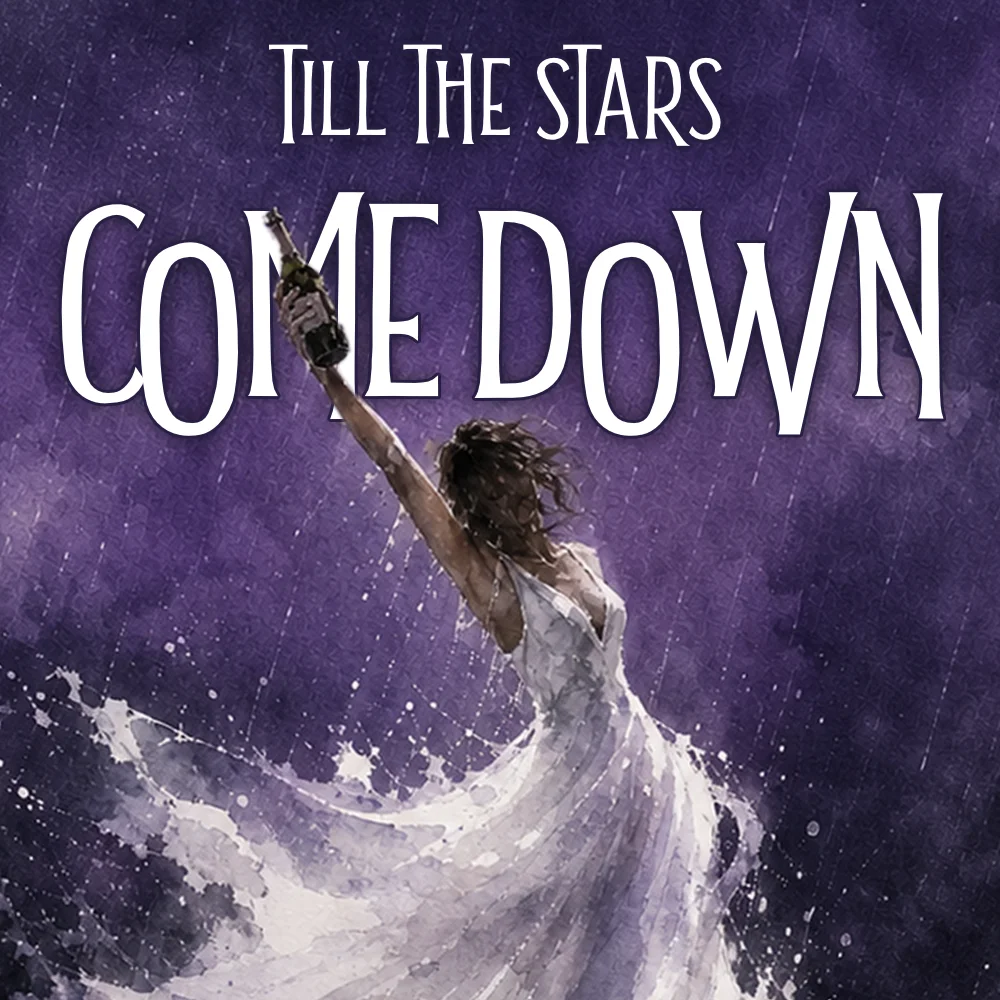


One wedding. One family. A lifetime of things left unsaid.
This non-professional production is by arrangement with Nick Hern Books Nick Hern Books.
It’s Sylvia and Marek’s wedding day in a former Nottinghamshire mining community, and the whole family has gathered for a proper celebration.
Sylvia is marrying Marek, a Polish immigrant who arrived in Britain with very little and has built a successful life for himself. He loves Sylvia, but becoming part of her family means stepping into a world shaped by decades of shared history, old loyalties, disappointments and resentments.
Over the course of almost 24 hours, the wedding unfolds in something close to real time. There’s laughter, dancing, beer, vodka and all the familiar chaos of a family celebration. But as the day turns into night and inhibitions disappear, long-held tensions begin to surface. Secrets are exposed, relationships are tested and seemingly throwaway remarks reveal much deeper divisions.
At its heart are three sisters – Maggie, Hazel and Sylvia – women who grew up together but whose lives have taken them in very different directions. Around them is a family bound together by love and history, yet also shaped by the enormous economic and social changes experienced by communities like theirs.
Both painfully funny and deeply moving, Till the Stars Come Down explores love, family, class, identity, immigration and belonging without offering easy answers or simple villains. Its characters are flawed, recognisable and fiercely human.
What begins as a wedding celebration becomes a night none of them will ever forget.
Till the Stars Come Down is set in the present day in what was once the heart of coal-mining country in Nottinghamshire. It’s Sylvia and Marek’s wedding day, and you’re all invited. Sylvia and her family have gathered to celebrate in traditional English fashion. What isn’t traditional is that, unlike her older sisters, Sylvia’s husband-to-be isn’t local: Marek is a Polish immigrant. As the festivities unfold, fuelled by beer and vodka, emotions run high, and fault-lines appear in this family that will change their lives forever.
The play takes place over an almost 24-hour period, and so events unfold in what feels like real time. The tensions and jeopardy build steadily throughout. It’s a play about secrets, shame, longing, love and devastation. From the heated straighteners of the morning of the wedding, to the heated arguments and recriminations the night ends with.
I think anyone who grew up in a working-class family or area – like I did – will recognise these people, these lives. When I first read it, I was immediately transported back to the weddings I was dragged to in my childhood. You could guarantee that at some point there would be an argument, someone called Debbie would be sick because she ‘doesn’t usually drink’, an old Irish man in suit trousers and a jacket that didn’t match would sing Danny Boy, and Diana Ross’s Chain Reaction would lure every middle-aged woman, siren-like, to the dancefloor. There was always drama. Always. And it was always memorable.
The term is bandied around a bit too much, but this really is a state-of-the-nation play. The circumstances and concerns of this one family echo the scars and divisions of the country we live in – especially the devastating economic and social changes in so much of the Midlands and North of this country. The ease with which we sometimes blame the thing in front of us – whether it’s immigrants, capitalism, zero-hours contracts, Brexit, deindustrialisation – because it’s easier than looking behind it to see how we got to this point.
But it’s also a family drama, in the universal sense: showing how we’re bound together by blood and history, wrestling with our individual and collective desires and disappointments. It’s not one-sided. It isn’t a ‘you’re wrong, I’m right’ piece of writing. These characters are real. The people are real. Their humour is real. Their world and their grievances are real and justified. As I said before, you’ll recognise these people. You’ll recognise their hopes, their faults, their prejudices.
Let’s talk characters. I’m not going to go through every one, because I think you should read the play and see if someone connects with you. But there are some to-die-for parts, especially for women.
The three sisters – Maggie, Hazel and Sylvia
At the heart of the play are three sisters who’ve grown up together, but have ended up in very different places. They’re not three variations on the same character. Each sister has her own history, her own wounds, her own ambitions and her own way of surviving the family she comes from. The relationships between them are everything: the intimacy, the shorthand, the old resentments, the teasing, the loyalty and the things they know about one another that nobody else does. They require actors who can make us believe in a lifetime of shared history – often within a single look or a throwaway joke. All three parts demand depth, comic timing and enormous emotional range. Each woman gets moments of extraordinary vulnerability, but none of them is simply a victim or a hero. They can be funny, cruel, loving, selfish, generous, infuriating and heartbreaking – sometimes within the same scene. There’s also a fascinating question at the centre of the three relationships: what happens when the roles we’ve played within a family for years suddenly stop working? These are substantial, demanding parts for actors who are comfortable allowing a character to be messy, contradictory and deeply human.
Marek
Marek is Sylvia’s fiancé and the outsider who’s become part of this family. He arrived in Britain with very little and has built a successful life for himself. He’s ambitious, capable and clearly loves Sylvia – but being accepted into her family isn’t quite as simple as being welcomed through the door. Marek needs an actor who can convey both strength and vulnerability. He’s an outsider, but he isn’t defined by being one. He has his own pride, humour, frustrations and ambitions, and his presence inevitably exposes some of the assumptions and prejudices that exist around him. There’s warmth and comedy in the character, but also steel. Marek isn’t someone who’ll quietly accept being diminished. The relationship between Marek and Sylvia is particularly important: this needs to feel like a real love story, not simply a device to put an outsider into the family.
John
John is the husband of one of the sisters and, in many ways, another man who’s become part of the family rather than being born into it. He knows these people intimately. He knows the history, the arguments and the dynamics – but he also occupies a slightly different position within them. John needs an actor who can find the humanity underneath the bravado. There’s humour here, but also frustration and a sense of a man wrestling with where his life has ended up. His relationship with his wife is particularly revealing: what remains between two people when love, disappointment, money, pride and years of shared history have all become tangled together?
Dad
The sisters’ father is one of the people around whom the family’s history has been built. He belongs to an older generation and carries with him the values, expectations and assumptions of the world in which he grew up. But this isn’t a caricature of a traditional working-class dad. He’s a man who loves his family, has his own disappointments and has lived through enormous changes in the world around him. There’s room for humour, affection and tenderness, but also for the uncomfortable things that can happen when an older generation and a younger generation no longer see the world in quite the same way. The actor needs to make us understand why this man became the person he is, rather than simply judging him for it.
Aunty Carol
And then there’s Aunty Carol. A gift of a part. Carol is the sort of woman who can walk into a room and immediately change its temperature. She has opinions. Lots of them. She’s funny, formidable and completely unafraid to say what she thinks. But the danger with Carol is playing only the comedy. Underneath the force of personality is a woman with her own history, her own disappointments and her own complicated relationship with the family. The comedy makes her hugely entertaining, but the actor playing her also needs to be able to reveal the human being underneath it. Carol should be funny enough that we want her in every scene – and complicated enough that we aren’t always sure whether we should. It is, frankly, a brilliant part.
Uncle Pete
Carol’s husband, Pete, has spent a long time alongside a very big personality. He’s part of the older generation of this family and has his own place within its history, but his relationship with Carol gives the character an interesting dynamic: sometimes he’s her partner, sometimes her foil, sometimes the person who’s learned when to keep quiet. There’s plenty of comedy in Pete, but the actor should resist making him simply the bumbling husband. There’s a real person here, with his own perspective on the family and the world they’ve inherited.
Leanne
Leanne is the older of the two younger characters and sits in an interesting position within the family. She’s old enough to be beginning to understand the adults around her, but young enough not to have inherited all of their certainties. She’s watching. Listening. Working things out. That makes her more than simply a young person caught up in the adults’ drama. What she sees – and what she doesn’t yet understand – gives us another perspective on this family. The role needs an actor who can bring intelligence, naturalism and a sense of a young person trying to work out where they fit, rather than simply playing ‘the teenager’.
Sarah
Sarah is the youngest member of the family. She’s still a child, and that matters. She experiences the wedding and the adults around her differently from everyone else. There can be enormous comedy in that, but also something much more affecting. Children notice things adults assume they haven’t noticed. They absorb atmospheres even when they don’t understand their causes. The actor playing Sarah will need to be completely natural and believable – not an exaggerated ‘stage child’ – and able to bring the audience into the world of the play from a child’s perspective.
For me, casting will be about getting the gaps, relationships and dynamics right. These characters have known each other for years. Some are related by blood; others have married into the family. There are alliances, rivalries, loyalties and old wounds. The chemistry between the actors is therefore just as important as the individual performances. I’m not going to turn anyone away who feels a real connection to a part because they don’t fit some arbitrary idea of what the character ‘should’ look like. If you read the play and recognise something in one of these people, I want to see you.
A word on accents: we’ll be going for proper, authentic Nottinghamshire – not just a vague ‘north of Woolmer Green’.
I love comedy, and it’s very, very funny, this play. But I also love things – as you may know – that take a baseball bat to your face. That say the things and have the arguments we, most of us, avoid at all costs. It doesn’t preach, and it offers no easy answers, but it also doesn’t let the division hide in the shadows. This play is important. Especially important now, in the climate we live in. With division everywhere. Not just far away, over there. Even here, in the leafy west side of WGC. In the things said, promoted and endorsed by prominent members of this theatre – ok, past members. Mostly.
There are many great lines in this play, but I’m going to leave you with this one: Marek, the Polish immigrant groom who arrived in the UK on a Megabus with £60 to his name, and now runs his own successful building firm, offers his new sister-in-law’s unemployed husband a job.
She mutters: “They give us jobs now, do they?” And Marek replies: “You need to decide whether you are a victim or superior – because you can’t be both.”
If you’d like to audition, scripts will be available from:
Production Manager, Sarah Gennoe
[email protected]
Please read the play before auditioning and, if possible, come with a sense of which character or characters you feel you connect with.
Further information about the audition process will be provided with the scripts. Come and have a read. Find the person in this family that speaks to you. And let’s see what happens.
Cheers
Mark

Do you have a question? Do you need help?
Feel free to contact us and we’ll be more than happy to answer your questions.
If you need to contact a specific department eg. Box Office, please select it from the dropdown list.
At the Barn we are committed to promoting equality and challenging discrimination in all its forms. We strive to create a safe and inclusive environment for all members of the cast and creative team, regardless of their race, ethnicity, disability, sexual orientation or gender identity and will work to prevent any form of discrimination or harassment within our organisation.

4.30pm – 5.30pm
7.30pm – 8.30pm
6pm – 7pm
9pm – 10pm
#elementor-action%3Aaction%3Dpopup%3Aopen%26settings%3DeyJpZCI6IjQ0MDYwIiwidG9nZ2xlIjpmYWxzZX0%3D
Pop up ticket link for event #elementor-action%3Aaction%3Dpopup%3Aopen%26settings%3DeyJpZCI6IjM4Mzk2IiwidG9nZ2xlIjpmYWxzZX0%3D

4.30pm – 5.30pm
6pm – 7pm
7.30pm – 8.30pm
9pm – 10pm
Pop up ticket link for event #elementor-action%3Aaction%3Dpopup%3Aopen%26settings%3DeyJpZCI6IjM4Mzk2IiwidG9nZ2xlIjpmYWxzZX0%3D
4pm – 5pm
5.30pm – 6.30pm
7pm – 8pm
8.30pm – 9.30pm